Will Prediction Markets Impact Horse Racing?
Back in February, the Asian Racing Conference brought together administrators, regulators and racecourse operators in Riyadh to discuss global issues common to the sport worldwide.
These included a reduction in the foal crop whose impact will be seen over a decade; the impact of AI, both in terms of threat and opportunity; black market betting's erosion of racing's core revenue stream, and prediction markets.
You may have seen prediction markets in the news recently. they are a new type of trading platform that allows the creation of and participation in markets based on yes-or-no principles. So, for example, you might have seen a market created for the recent Makerfield by-election based on the premise, “Will Andy Burnham win the election?” Traders take either side of the market to determine the odds, and the payout is based on the volume of money placed on either side at the time you took the trade.
The reason that these platforms have been in the news is that there was some criticism of markets being created for controversial subjects, such as the Iran War.
However, when you dig into the actual numbers of what people are actually trading, it isn’t elaborate markets based on politics or current affairs – people are mostly trading sports.
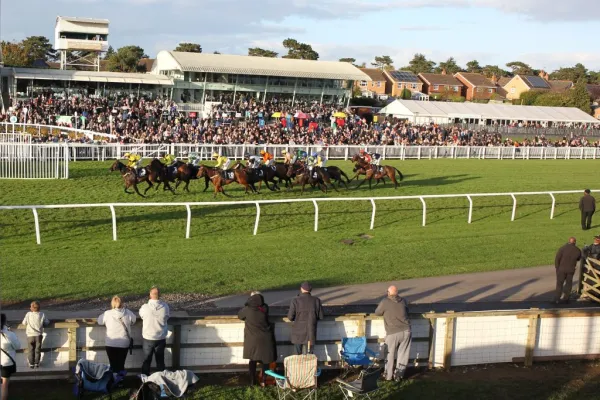
Horse racing can be covered by prediction markets
Does that include horse racing? To an extent, though we should say only the big events for now – the likes of the Epsom Derby and Kentucky Derby. DraftKings Sportsbook has launched new prediction markets online in the US with a heavy focus on sports, so we’d expect to see a lot of US racing on that platform as it evolves, and what starts in the US blows over to the UK fairly quickly.
Does this represent a risk to horse racing, including in the UK? It is a complex question, and there isn’t an easy answer. The first thing to say is that the actual trading is very similar to what happens on betting exchanges, which also use yes-or- no principles, so in that respect, there is very little that might feel new here if you already bet using exchanges.
Secondly, and as is apparent with DraftKings, these platforms might become an extension of UK bookmakers’ services, though no major UK brand has launched one yet. But, if they do, you imagine they would also be subject to the racing levy and broader taxes, with the former feeding back into grassroots horse racing.
Platforms have drawn in traders
Indeed, you might argue that these platforms could give horse racing betting a bit of a shot in the arm for popularity. We said that they are like betting exchanges, but they do work a little bit differently. Indeed, as platforms evolve, you might see more personalization come into play, such as creating your own bespoke horse racing markets and even trading with a group of friends.
Perhaps the biggest danger comes from unregulated platforms. Again, to mention the DraftKings example, the massive US-based fantasy sports and betting company took the legal route, obtaining the required trading licenses from US regulators to offer those prediction markets, but many other platforms remain offshore and unlicensed. The hammer of the law could fall hard on those sites, but it sometimes does not deter them, nor does it dissuade users from using VPNs to access them.
The same thing happens with unlicensed bookmakers and casinos, including in the UK. Yet, for regulated platforms, you can see the allure of trading in horse racing. It gives bettors a chance to trade against other people, rather than the odds determined by the bookmakers. They are less formal than betting exchanges, and arguably a bit more beginner-friendly. Time will tell whether they will be adopted by UK-licensed bookies and how much impact they will have on horse racing, but given the trajectory of growth of these platforms, there is a fair chance it will happen.