Some horse races rise above the rest, shaping seasons, influencing breeding, and drawing attention from across the globe. From Dubai’s desert lights to Ascot’s manicured lawns, these events blend history, culture, and elite competition like few others.
For fans and insiders alike, they act as reference points that mark the rhythm of the racing world and set the stage for the year ahead. Each result reverberates beyond the finish line, impacting breeding decisions, international campaigns, and the way the sport is followed worldwide. The prestige of these races ensures they remain defining moments that capture the imagination of the global racing community. Sadly, few of these are Jump races, but that doesn’t stop a racing enthusiast from enjoying fast horses, wherever they appear.
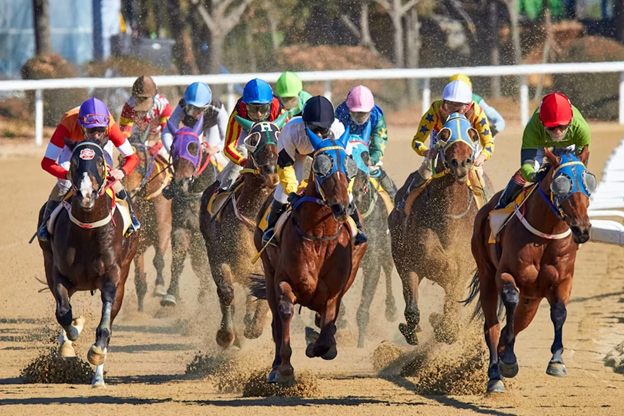
The Dubai World Cup: racing’s global crossroads
The Dubai World Cup feels like racing’s opening statement. Held each March at Meydan, it arrives just as many jurisdictions emerge from winter, straight after Cheltenham, and signals that the international season is fully underway.
Meydan itself plays a role. Its scale, spectacle, and setting project modern ambition, while the race’s purse attracts elite runners from every major racing nation. American dirt specialists line up against European turf stars experimenting on the surface, alongside challengers from Japan, Australia, and the Middle East.
Timing matters here. The Dubai World Cup sits perfectly between hemispheres, giving trainers a chance to test form early and owners a global stage before spring classics elsewhere. For many, it is less about one result and more about setting the tone for the year ahead.
The Kentucky Derby: America’s gateway to international competition
The Kentucky Derby remains one of sport’s great contradictions. Rooted deeply in American tradition, it has quietly become one of the most international races on the calendar.
The expansion of the Road to the Kentucky Derby has changed everything. European, Japanese, and Middle Eastern qualifiers now feed into Churchill Downs, bringing diverse bloodlines and training styles to a race once dominated by domestic prep races. The result is a more global contest, even if the setting remains unmistakably American.
For racing fans outside the United States, Derby week has become a time to track international contenders, compare prep form across regions, and follow the build-up from afar. Many now engage digitally, monitoring odds, analysis, and race-day coverage through platforms offering features such as FanDuel Racing bonus bets, which fit naturally with the global attention surrounding marquee fixtures.
The Derby still lasts two minutes. Its impact stretches far longer.
Royal Ascot: where sport, society and tradition intersect
Few events blend racing and ritual like Royal Ascot. Founded in 1711, it carries a weight of tradition that even first-time visitors can feel immediately. From the opening strains of the national anthem to the precision of the Royal Procession, every detail reinforces Ascot’s status as a cornerstone of the British sporting calendar within and well beyond racing circles.
The Royal Procession, the dress codes, and the meticulous presentation all signal that this is more than a race meeting. Yet beneath the pageantry lies fiercely competitive racing. International trainers and owners meticulously plan campaigns to target Ascot victories, understanding that prestige often outweighs the immediate prize money. Success here carries long-term weight, enhancing reputations, shaping breeding decisions, and influencing the strategies of competitors around the globe.
For sprinters and milers, an Ascot win can define a career. For owners from overseas, success here signals acceptance into the upper tier of European racing culture, a recognition that resonates well beyond a single season. That blend of social theatre and sporting seriousness is precisely why Royal Ascot continues to draw global attention year after year.
The Priz de l’Arc de Triomphe: Europe’s defining Championship
The Arc is often described as a monument rather than a race, and Longchamp on the first Sunday in October lives up to that reputation. For many in the sport, it represents the ultimate test of European middle-distance excellence.
Unlike festivals spread over days, the Arc distils everything into one defining contest. Europe’s best middle-distance horses converge, joined regularly by challengers from Japan, Ireland, and the UK. Winning the Arc is not about hype or spectacle; it is about legacy.
The race’s position late in the season adds to its gravity. Careers can be cemented in a single run, and breeding valuations can change overnight. For many seasoned racing followers, the Arc remains the purest expression of elite Thoroughbred competition on turf.
The Melbourne Cup: a national tradition with global reach
Few races carry cultural weight quite like the Melbourne Cup. Branded as “the race that stops a nation,” it has grown far beyond Australian borders, evolving into a shared moment for racing audiences across multiple continents.
The Cup’s demanding two-mile distance invites international challengers bred specifically for stamina. European trainers, in particular, have reshaped their campaigns to target the race. Asian connections increasingly see it as a global prize worth chasing. Many even plan entire seasons around a single November appearance.
Television audiences stretch worldwide, and the Cup’s handicap format keeps intrigue high until the final strides. What began as a national tradition now sits firmly within the global racing conversation, uniting fans through a rare blend of endurance, uncertainty, and spectacle.
How these fixtures shape the modern racing calendar
Together, these races form the backbone of the international season. Their sequencing creates a natural flow:
- Dubai opens the global conversation,
- Kentucky introduces spring classics with international reach,
- Ascot defines early-summer excellence,
- The Arc crowns Europe’s season,
- Melbourne closes the year with endurance and spectacle.
Qualifying pathways, reciprocal invitations, and international partnerships have tightened these links further. Trainers and owners now think globally by default, not as an exception.
The heartbeat of the global racing calendar
These fixtures endure because they balance tradition with evolution, respecting history while embracing global participation, modern broadcasting, and changing fan habits. For racing fans, they offer more than entertainment, providing context, continuity, and shared moments that connect racing cultures worldwide. As the sport globalises, these races remain emotional and competitive anchors, reminders of why Thoroughbred racing still captivates audiences across continents.
Content reflects information available as of January 2026; subject to change.